
By LAN HA OVERNIGHT CRUISE · 3 min read · Sources checked
The limestone towers and caves belong to a long landscape history; a cruise lets you see selected parts of that setting at different scales.
Check the trip for your datesIn this guide
Karst describes a landscape shaped by soluble rock
Karst is a landscape associated with the dissolution of soluble rocks such as limestone. The US Geological Survey explains how water and rock interact along fractures and openings, gradually contributing to the development of caves. The word is more informative than calling every cliff a strangely shaped island: it connects the surface forms with a wider history of rock and water.
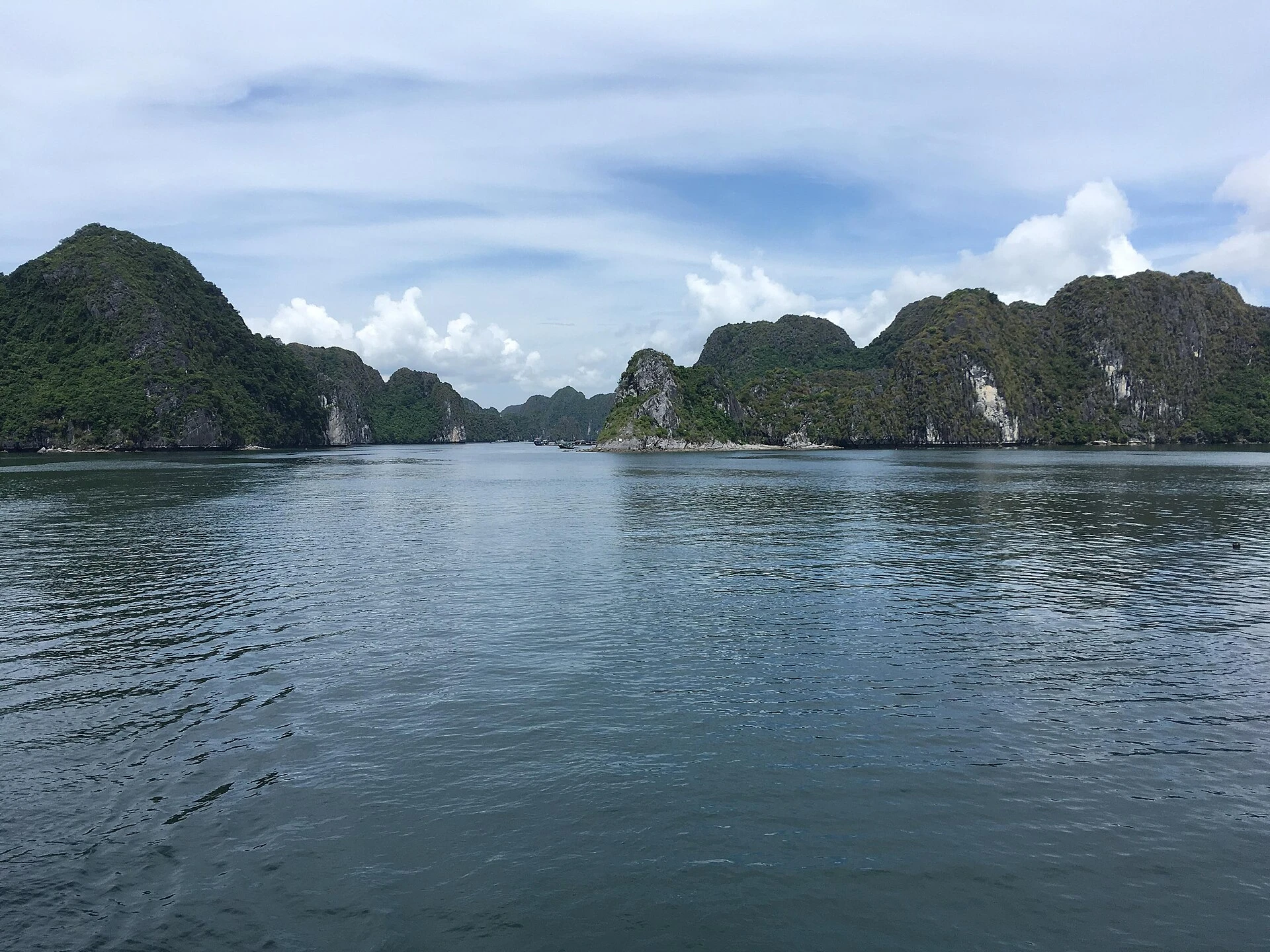
NASA’s account of Ha Long Bay likewise describes the setting as a karst landscape. From a cruise, you can see the contrast between the open water and steep island forms. A short visit does not need to explain every individual tower to make that larger relationship interesting.
A view from the deck and a cave visit work at different scales
Cruising past a limestone island gives a broad view of its outline and setting. Entering a show cave presents a different scale, with the route focused on a particular opening and interior. These are complementary experiences rather than interchangeable versions of the same stop.
Aqua Classic combines its Ha Long circuit with Sung Sot and Luon in the published programme. Aqua Elegance pairs Tra Bau with Thien Cung and Dau Go. The geology gives those places a shared landscape context, but it does not make their itineraries identical or guarantee access to every cave seen from the water.

Use the science without assigning an unsupported story to every rock
A general explanation of limestone dissolution does not tell a visitor the exact age or formation history of a particular cliff beside the boat. Keep precise dates and individual cave histories attached to reliable site-specific information. You can appreciate the shape and setting without inventing a geological label for every photograph.
The same care helps when local names describe an island through a familiar animal or object. Such names can be memorable ways to recognise a form, but they are not substitutes for a geological explanation. Treat the visual resemblance and the rock-forming processes as two different kinds of description.
Choose the way you want to experience the landscape
For someone mainly interested in the seascape, deck cruising and the changing view between islands may be a central attraction. A traveller drawn to cave interiors can instead compare the named show-cave stops. A guest wanting a water-level perspective can look at the actual kayaking programme. These preferences help turn an interest in the landscape into a suitable itinerary.
For example, two friends may both enjoy limestone scenery while one values a lagoon paddle and the other wants a cave visit. Compare the service’s named activities and sequence before choosing the cabin. A larger room can change the onboard stay, but it does not add a geological stop missing from the programme.
Read the selected route before boarding
Keep the actual boarding port, listed sights and activity format together. The wider limestone landscape is the setting; your chosen route is the specific journey through it. Ask about an essential stop before confirmation, and follow the departure’s current operating instructions rather than treating a photograph of a cave entrance as permission to visit independently.
- Compare named cave stops, not the general word cave.
- Distinguish scenery viewed from the vessel from a planned shore visit.
- Keep exact geological dates tied to site-specific sources.
- Choose the itinerary for the perspective you want: deck, water-level activity or cave interior.
Questions answered
Does a general karst explanation give the exact age of every island?
No. Specific ages and the history of an individual formation need site-specific evidence.
Does seeing a cave entrance mean the cruise includes a visit?
No. Read the named stops and activities in the selected itinerary.
Before you confirm
This guide draws on the listed services and booking policies. Your selected operator’s availability, itinerary, inclusions and final quote are confirmed for your travel date.
Further reading
Related planning guides
Choose the trip that fits your plans
Select this service to request the cabin arrangement and journey described in this guide.
Compare dates and cabin options